
20th October 2026
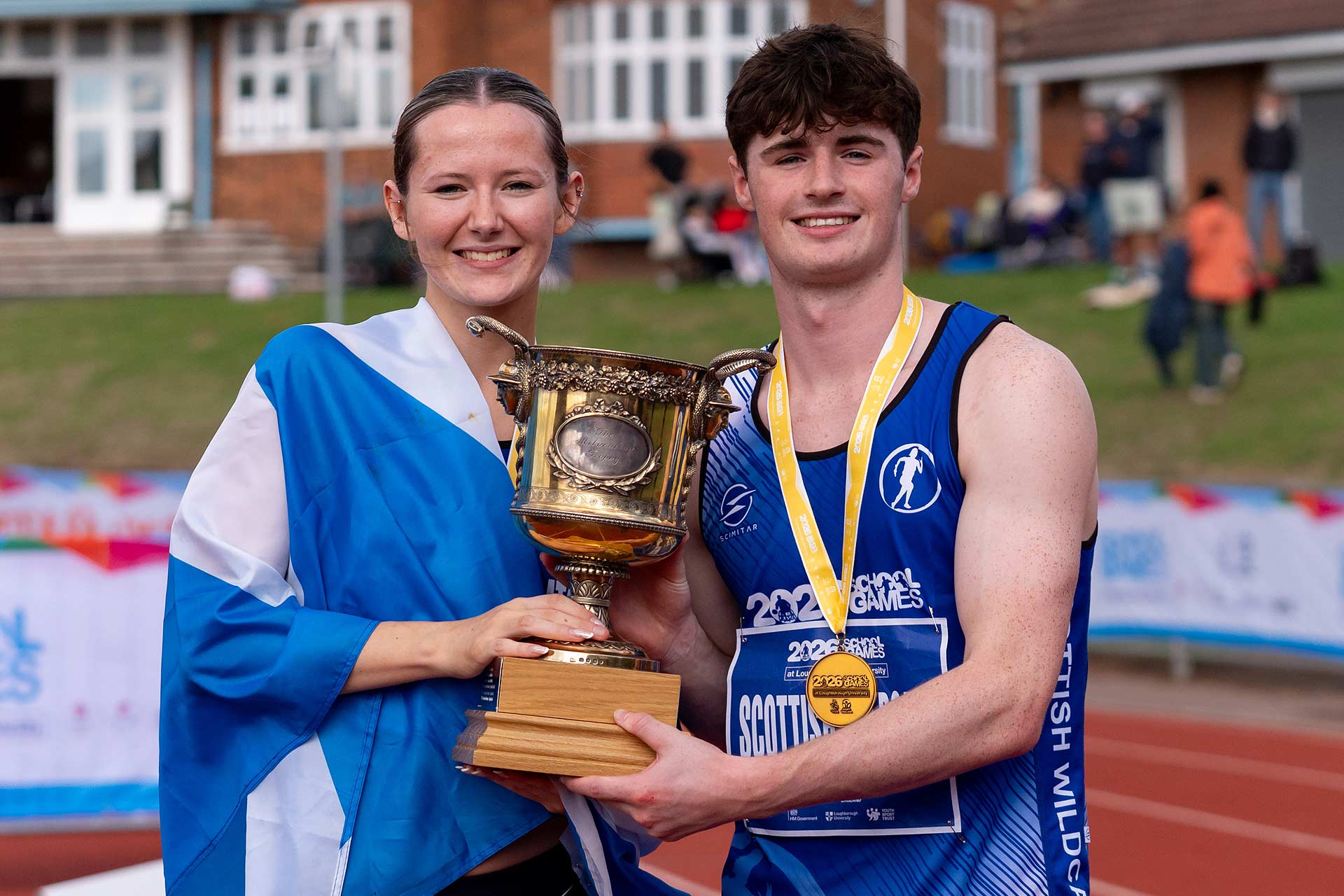
The Scottish Wildcats were crowned athletics champions at the 2026 School Games National Finals as European Athletics’ fast-paced, mixed-team Dynamic New Athletics (DNA) competition format made a thrilling debut in United Kingdom school sport.
Staged under the auspices of the country’s Youth Sport Trust at Loughborough University’s Paula Radcliffe Stadium on 4 and 5 September, the four-match tournament brought together more than 200 U18 athletes, including para-athletes, on ten teams representing Scotland, Wales, Northern Ireland and seven English regions.
Although it was the first time the format was used for this age group, DNA was initially seen in Britain at an elite indoor international in Glasgow’s Emirates Arena in February 2022, when the Spanish national team took top honours ahead of second place England and third place Ireland.
Four years later, the Wildcats’ victory provided a link to the Glasgow event and, importantly, demonstrated how the concept could be adapted for younger athletes.
The Hunt delivers the verdict
Each match comprised five men’s and five women’s disciplines, a mixed 4x400m relay plus para-athletics competitions leading up to the Hunt, the final mixed medley relay of 600m women, 400m men, 200m women and 800m men.
As in all DNA competitions, scoring was based on the places achieved in each discipline, which meant that every team member’s result added to their team’s cumulative points. Point totals going into the winner-takes-all Hunt determined the order and time gaps for the staggered start, with each point worth approximately 0.33 of a second.
For the first time anywhere, the contributions of the para-athletes were incorporated into DNA matches using the Raza system, which converts performances into scores adjusted for the athlete’s disability classification. The Raza scores in the competitions integrated into four of the match disciplines for each team’s para-athletes were averaged and then ranked as the 12th scoring discipline.
In Friday’s preliminary matches the Scottish Wildcats and the Midland Bulls emerged as the winners. The two finals on the following day then provided exciting demonstrations of the DNA format’s potential for drama.
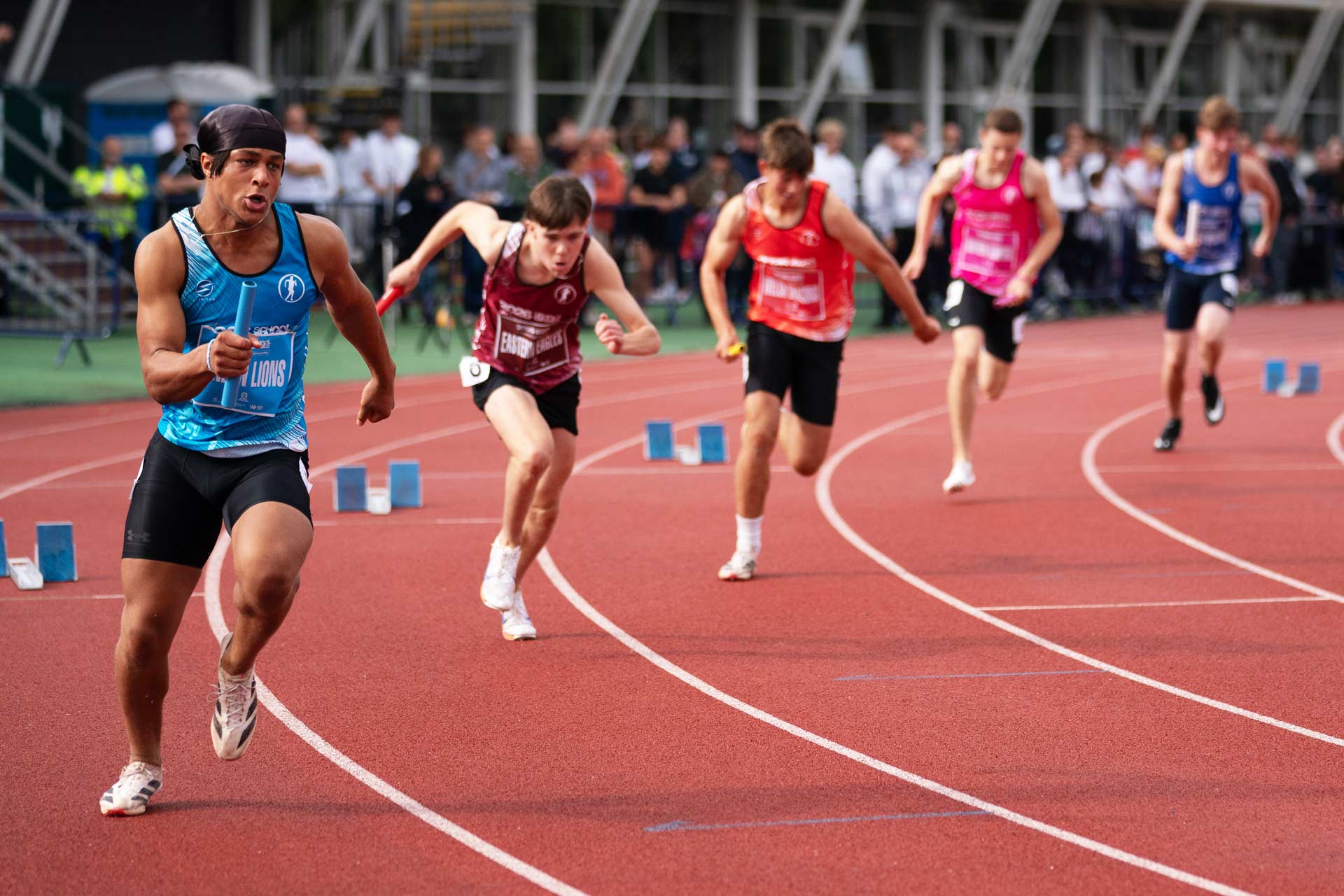
The morning’s B Final saw the London Lions, who had finished at the bottom of the pack in their Day 1 match, manage to stay close enough to the leaders to start the Hunt in third, 3.33 seconds behind the Eastern Eagles and 1.33 seconds behind the second place Welsh Dragons.
After a close tussle through the first three legs, the Lion’s anchor Paul Nixon was able to pull away on the final lap of the race, sealing a 4:49.33 performance to clinch the victory.
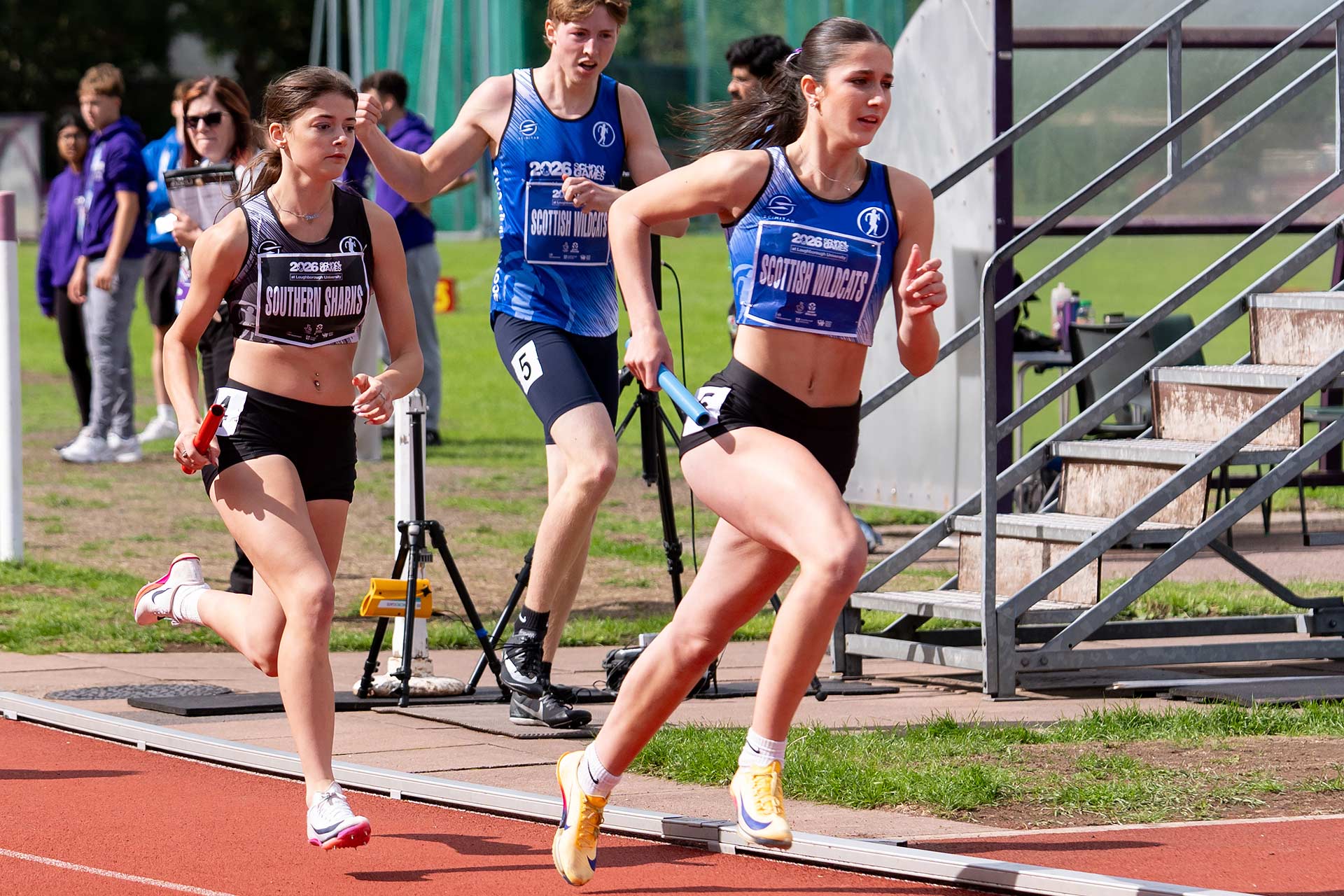
In the afternoon’s A Final, the Wildcats jumped off to a dream start, collecting maximum points from the first four disciplines but the Southern Scorpions were never far behind and fought back with first places in three of the last five events to draw even with the Scots at 80 points going into the Hunt.
Pulling away at the end of the first leg, the Wildcats squad never looked troubled and to the delight of their wildly cheering teammates secured the overall championship with a 4:46.78 performance.
The Scorpions meanwhile had to fight hard right through the last lap to hold off the Bulls, who had charged through strongly after starting the race last, a full six seconds behind the leading pair.
Top performers
While team results were the main focus, many individual performances by the 15, 16 and 17 year-old participants underlined the overall quality of the competition.
The experimental age-grading analysis developed by the online athletics results and performance-tracking platform OpenTrack identified Midland Bulls athlete Caleb Green, 16, as the leading male performer. He received an age grade of 101.61% for his 14.04 sec (-0.2 m/s) A Final second place in in the 110m hurdles behind Douglas Knox, 17, of the Wildcats, who ran a Scottish U18 record of 13.86.
By the same analysis, the Wildcat’s Holly Whittaker (18) was named the top female performer for winning the 100m hurdles in the A Final with a personal best of 13.29 sec (-0.2 m/s), earning her an age grade of 98.41%.
Macey Hand (16) of the Northern Wolves led the para-athletes, recording 13.63 sec (+0.6 m/s) in the 100m for a Raza score of 1086 points on Saturday.
A successful experiment
According to Dean Hardman, the development activities consultant who led the delivery of the athletics competition on behalf of England Athletics, this year’s School Games National Final was an opportunity to test a different approach to youth competition and expand the performance pathway.
“We, the organisers, took a decision to try something new, which is rare in our very traditional sport, and I am happy the Youth Sport Trust, England Athletics and the funders Sport England saw fit to back the experiment,” he said.
“In addition to the constantly evolving team scores, which held everyone’s attention throughout the matches, the event presentation with music and real-time interviews really added to the overall experience.”
“We are currently in the process of conducting a survey of the athletes and others involved to document the reactions but from the initial feedback I have received there is a strong feeling that the event was a big hit.”
Echoing Hardman’s assessment, Alison Oliver, Chief Executive of the Youth Sport Trust, welcomed the innovation at the Games saying: “This year the sport of athletics pioneered the DNA format. It was a great success and we were delighted with the impact.”
“DNA enhanced the athlete experience, facilitated more diverse representation, and transformed the sport presentation.”
Also praising both the format and the presentation was Joe Haywood, a coach for the Southern Sharks team who said: “The athletes really enjoyed the team approach blended with the DNA format.”
“Prioritising one event at a time really boosted the team experience, as coaches, spectators and, most importantly, the athletes could easily watch and cheer on their team.”
“The rapid nature of the format kept things fresh and, for me as a coach, provided the athletes with a positive challenge and new stimuli that will help them develop on the track in the future.”
Building the pathway
After demonstrating the potential of DNA to make youth athletics competition more engaging, inclusive and accessible, Hardman suggested that the experiment at the School Games could have implications for the sport in the UK beyond championships and top-level events.
“I believe a team-based athletics format could prove to be attractive for the grassroots of the sport, especially schools and clubs seeking to increase the participation and retention of teenagers through alternatives to traditional all-day meetings,” he said.
“We will have to see how things develop, but I think this event was a big first step.”
See the action:
Day 1: https://www.youtube.com/live/eGOxFw9KsO4
Day 2: https://www.youtube.com/watch?v=CEc4tpWoNFU

