
20th October 2026
The first use of European Athletics’ Dynamic New Athletics (DNA) format in a UK grassroots competition has received encouraging feedback from participating athletes, coaches and officials following this year’s School Games National Final.
A post-event survey found that 93% of the responding athletes rated their overall experience of the event as either good (23%) or excellent (70%), while comments on the new competition format included: “It was very good”; “I like how the new concept was”; and “[It] made it more exciting”.
The athletics competition of the Games, whose technical delivery was overseen by England Athletics, took place at Loughborough University’s Paula Radcliffe Stadium on 4 and 5 September. The online survey was conducted shortly after the Games.
Athletes accounted for 53% of the survey sample of participants from England, Scotland, Wales and Northern Ireland, while team managers, coaches and other support staff made up 27%. The remainder comprised parents and spectators.
Much of the positive feedback received from coaches and support staff highlighted the team and team-bonding aspects of DNA.
Other comments included: “Given it was the first attempt at something new, it was good”; “Overall I like the new DNA format and [it] can be brilliant with the right adaptations”; and “I liked the fast-paced nature of it”.
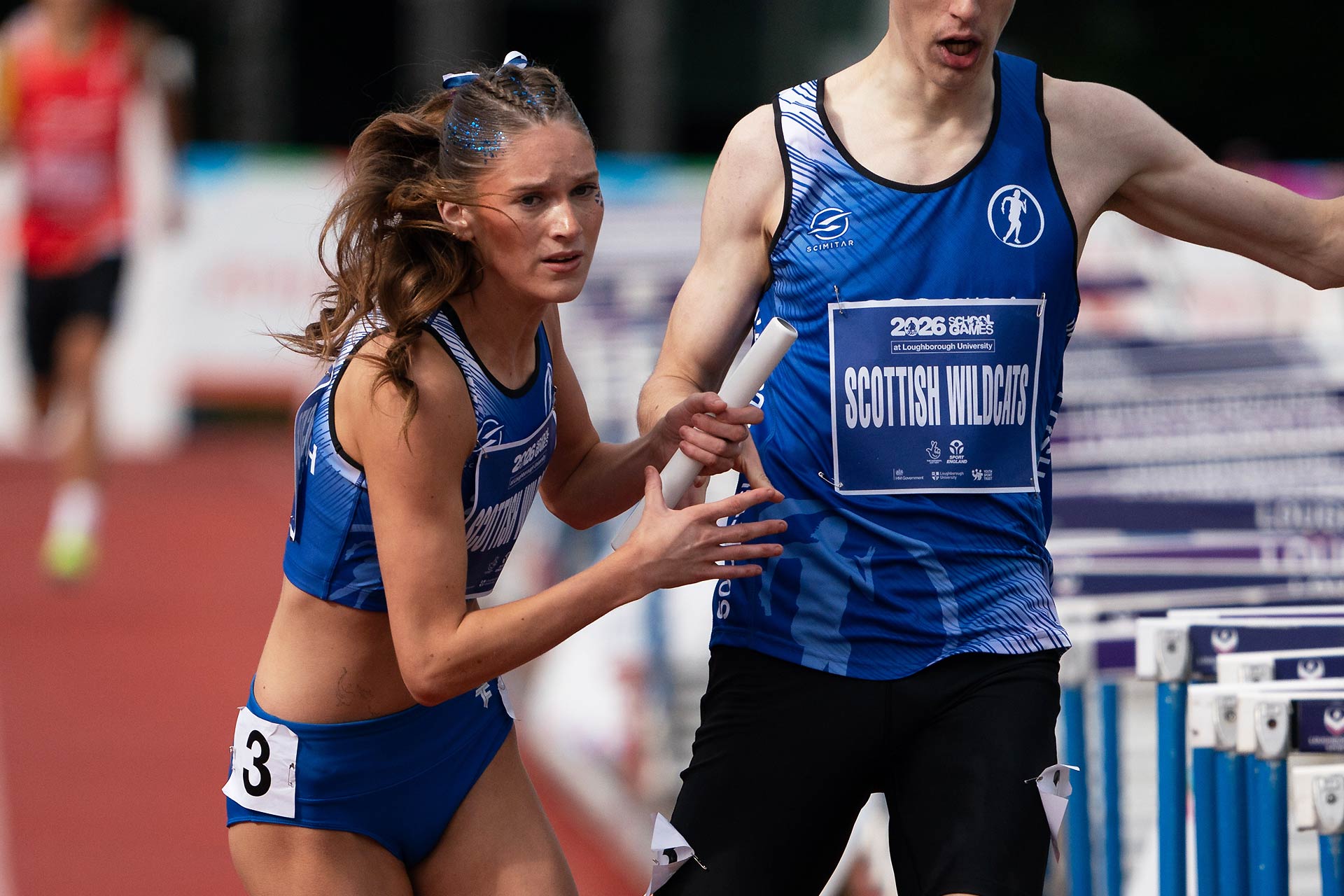
One respondent also singled out the Hunt, the format’s concluding pursuit relay, commenting: “The Hunt became the deciding factor for the final positions – far more exciting than a standard relay”.
Competition officials were surveyed separately and reported that they were “positive about the concept and willing to embrace the new approach”.
Their key observations included:
• The format highlighted field events more effectively.
• The Hunt element was well received.
• Despite being unfamiliar with the format, officials, athletes and team managers adapted well.
“These two surveys confirm the very positive initial feedback I received on site,” said lead organiser Dean Hardman, who had championed the introduction of DNA at the Games. “They show the event was an enjoyable experience for everyone and that our DNA experiment worked well.
“They also provided some constructive criticism and concerns we can address through adjustments to the concept or improved communication.”
European Athletics Vice-President Cherry Alexander, a strong advocate of DNA at international level, welcomed the findings.
“It’s important for everyone to see DNA work well in a high-profile national event like the School Games National Final and Dean has done a really great job to make it happen this year,” she said.
“Now I hope people will start to think about how this format can add value to competitions in other contexts and help us to increase the participation of young people in our sport.”
Hardman added that he is already coordinating discussions with the event’s stakeholders, including school and athletics authorities and the UK’s Youth Sport Trust, about adapting the DNA format for the next School Games National Final in 2028.
He also hopes to encourage wider experimentation.
“It would be great if we could use our collective influence to get groups of local schools or clubs to try organising a DNA competition and see what we learn from that,” he said.

